George Helmecke
established Optivision in 1990. The company would be located in Cliffside Park
until 2006, at which time its offices were moved to Englewood Cliffs, New
Jersey. Initial
services were limited to the consumer eyecare field, by providing
Ophthalmologic and
Optometric examinations, patient care and treatment. Optometric
services included the fitting of particularly difficult contact lenses
and providing an extensive on site specialty contact lens inventory.
 Over
the course of time the company would expand into other vision care
related products and services. These included exclusive Italian, as
well as Korean and Chinese eyeglass case collections. In March 2000
the US patent office granted Optivision an utility patent for an
instrument, now commonly known as the
PAL-ID.
This instrument would make the identification of progressive addition
lenses a precise and simple task. Since its inception the PAL-ID has
been sold throughout the world. The instrument can be found on every
continent, and most every quality optical shop, optometric practice
and lens manufacturing laboratory throughout the USA.
Over
the course of time the company would expand into other vision care
related products and services. These included exclusive Italian, as
well as Korean and Chinese eyeglass case collections. In March 2000
the US patent office granted Optivision an utility patent for an
instrument, now commonly known as the
PAL-ID.
This instrument would make the identification of progressive addition
lenses a precise and simple task. Since its inception the PAL-ID has
been sold throughout the world. The instrument can be found on every
continent, and most every quality optical shop, optometric practice
and lens manufacturing laboratory throughout the USA.
More recent innovations
include the Spec Suspender
eyeglass retainer collection, featuring the
Slip-Knot (patent pending) connector.
Currently the company is developing a collection of slim profile and
folding reading glasses, designed and manufactured to a quality level
significantly beyond all existing products currently available in the
"ready reader" marketplace. The most innovative of among these is the
patent pending
Quadrafold
mini folding reading glass.
 Helmecke
Brillen
Helmecke
Brillen
 In
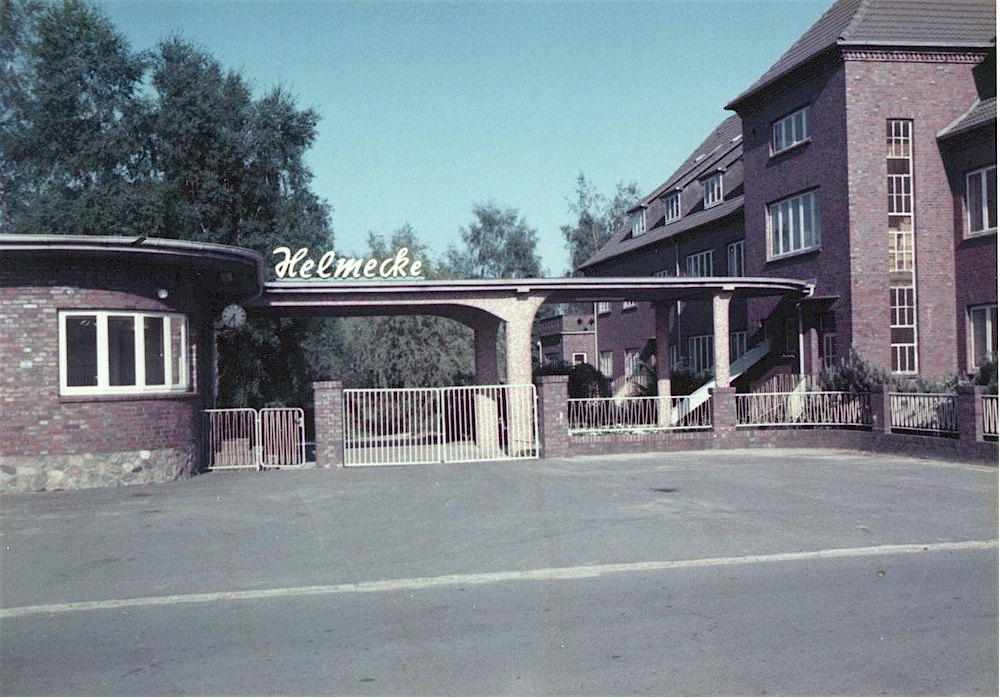
1947 Gerhard Helmecke established the firm which would bear his name in Wattenbek,
a pastoral farming community 12 miles southwest of the Baltic port
city Kiel.
In
1947 Gerhard Helmecke established the firm which would bear his name in Wattenbek,
a pastoral farming community 12 miles southwest of the Baltic port
city Kiel.
Lacking
even modest financial resources, as well as a source for essential
machinery, every piece of production equipment would be salvaged from scrap-yards. Moreover, virtually all machinery
had been severely burned and damaged during the war, all would require
painstaking reconditioned and modification.
 The
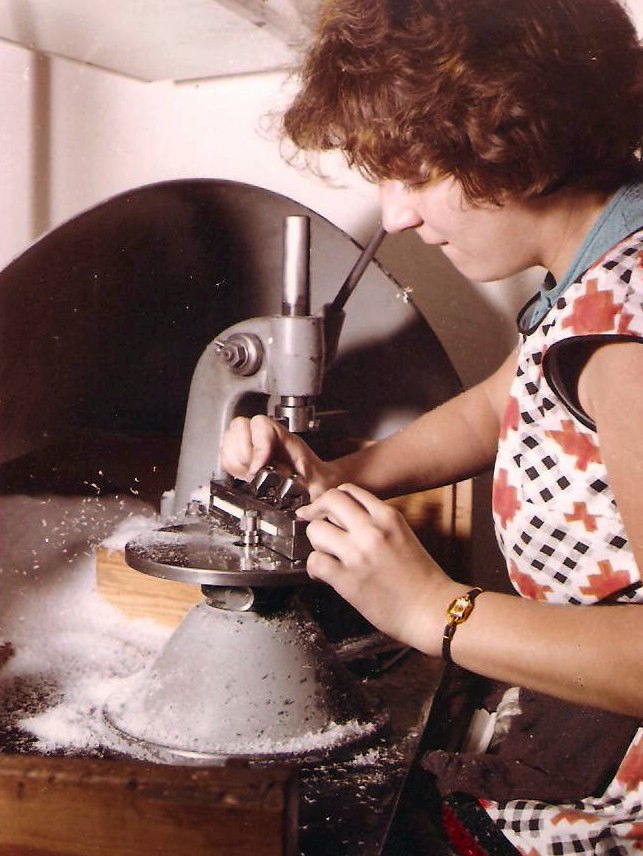
firm began its existence as a contract supplier of eyeglass temples;
these were sold to a regional eyeglass frame manufacturer. The
production of temples was fraught with problems as highly flammable
celluloid material required drilling to a depth of 6" inches
(150 mm). The combination of an extraordinarily deep and narrow hole
(1/16"diameter) resulted in the frequent breakage of nearly
irreplaceable steel drill bits. To keep breakage to a minimum only a select few production workers
were assigned the challenging and sensitive task of drilling out core wire holes.
The
firm began its existence as a contract supplier of eyeglass temples;
these were sold to a regional eyeglass frame manufacturer. The
production of temples was fraught with problems as highly flammable
celluloid material required drilling to a depth of 6" inches
(150 mm). The combination of an extraordinarily deep and narrow hole
(1/16"diameter) resulted in the frequent breakage of nearly
irreplaceable steel drill bits. To keep breakage to a minimum only a select few production workers
were assigned the challenging and sensitive task of drilling out core wire holes.
 Despite
these and many other daunting challenges the firm grew rapidly, rising
from the post war ashes. Within a few years the firm began to produce
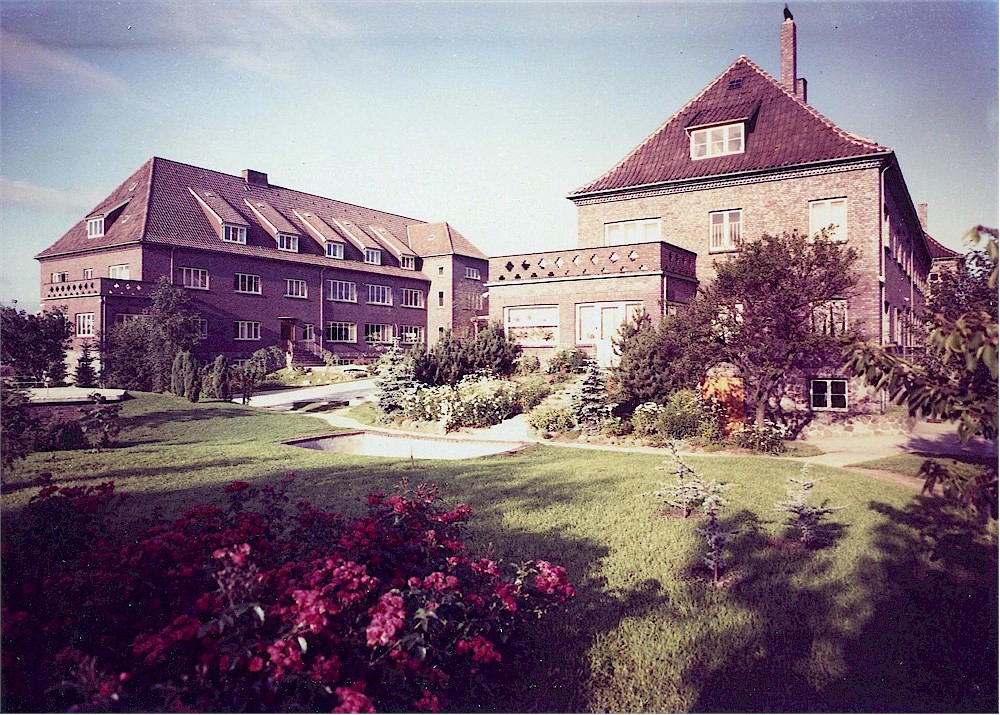
complete frames. The new model manufacturing facility, set within a nature-park landscape would eventually expand to more than
one quarter million square feet. Contained within four
primary and five secondary buildings. Primary
manufacturing and administration facilities were completed by the
early 1960's.
Despite
these and many other daunting challenges the firm grew rapidly, rising
from the post war ashes. Within a few years the firm began to produce
complete frames. The new model manufacturing facility, set within a nature-park landscape would eventually expand to more than
one quarter million square feet. Contained within four
primary and five secondary buildings. Primary
manufacturing and administration facilities were completed by the
early 1960's.
Beyond the sprawling production facilities the plant included
extensive and completely self sufficient: tooling department,
machine shop, electrical department, wood working department, painting department,
printing department, design and drafting department, raw material
production facility, fire department, employee cafeteria and
recreational facilities,
 Frame
production included not only high volume die cut stamping, but molding injection, as well as
pantograph methods. The bulk of material used for die cutting and pantographing was generated through wide sheet extrusion,
by means of a
multi-line, multi-color facility. Hinges,
rivets
and core wires were produced with swaging machines and other automated
optical wire processing machinery.
Frame
production included not only high volume die cut stamping, but molding injection, as well as
pantograph methods. The bulk of material used for die cutting and pantographing was generated through wide sheet extrusion,
by means of a
multi-line, multi-color facility. Hinges,
rivets
and core wires were produced with swaging machines and other automated
optical wire processing machinery.
Employing up to 400, the state of the art factory produced as many as
8,000 frames per day, making it the third largest eyeglass frame
producer in Germany, just behind two long established competitors, Metzler and Rodenstock.
 New Jersey Optical Company
Irvington's New Jersey
Optical had been a
renowned and particularly innovative manufacturer of high quality gold
filled metal frames. Its ability and reputation unequaled by all but a
few American
and European optical manufacturers.
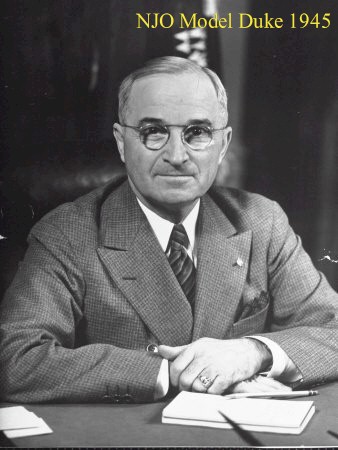
 More
than 100 skilled employees were engaged in manufacturing intricate metal
frames; establishing a unique reputation and a following of loyal
customers, including then US president Harry S. Truman.
More
than 100 skilled employees were engaged in manufacturing intricate metal
frames; establishing a unique reputation and a following of loyal
customers, including then US president Harry S. Truman.
Fortune would not continue
to be kind to NJO, as the late 1950's brought internal upheaval,
which ultimately resulted in the sale to Standard Optical Company,
the world's largest optical hinge manufacturer.
The next decade would see
further and a more severe decline following management's benign
neglect. Facing a directionless future, NJO's production facilities
became increasingly antiquated. By the early 1960's the company was
again "for sale".
Renovation and Re-equipment
 Following the acquisition of NJO
from Standard Optical the facility was entirely refurbished. Overhead
belt driven machinery was replaced by individual motors, while ceilings,
walls and radiators were thoroughly cleaned and repainted. Thick half
century oak floors were sanded, refinished and lacquered. A multitude of
ventilation fans gave way to air-conditioning. The latest modern German,
French and Italian metal frame manufacturing equipment and tool room
machinery were installed
in the Irvington facility.
Following the acquisition of NJO
from Standard Optical the facility was entirely refurbished. Overhead
belt driven machinery was replaced by individual motors, while ceilings,
walls and radiators were thoroughly cleaned and repainted. Thick half
century oak floors were sanded, refinished and lacquered. A multitude of
ventilation fans gave way to air-conditioning. The latest modern German,
French and Italian metal frame manufacturing equipment and tool room
machinery were installed
in the Irvington facility.
 Production
equipment included automatic wire reduction machines, wire cutting
machines, wire drawing, atmosphere controlled continuous run annealing
ovens and fully automatic eye-wire forming machines, high capacity
hydraulic presses, automatic hinge manufacturing machines, temple
core-wire injection machines, molding injection machines, spot welding
machines, resistance and induction heat soldering equipment and
wire sawing equipment. State of the art metal finishing and
electro-plating facilities were supplied by leading domestic sources.
Production
equipment included automatic wire reduction machines, wire cutting
machines, wire drawing, atmosphere controlled continuous run annealing
ovens and fully automatic eye-wire forming machines, high capacity
hydraulic presses, automatic hinge manufacturing machines, temple
core-wire injection machines, molding injection machines, spot welding
machines, resistance and induction heat soldering equipment and
wire sawing equipment. State of the art metal finishing and
electro-plating facilities were supplied by leading domestic sources.

Focal Point Opticians came
into existence during the fall of 1977 with the objective of providing
quality personal service at discount prices to the retail consumer. At
the time the largest optical chain store was Sear's Cole National
and the regional Sterling Lensco. Lenscrafter's and
Pearle Optical did not exist.
 The
late 70's were heady times for the optical industry as designer branded
eyeglass frames were ushered in. Ordinary frames were placed into
"collections" and metal plaques affixed to the temples; each plaque
representing a particular designer or personality. Among the most
successful of these were: Diane Von Furstenberg, Oscar De La Renta,
Nina
Ricci, Christian Dior and American Optical's Dorothy Hamill collection.
The store's somewhat remote Palisade Avenue shopping location would prove to
be challenging right from the start and continued to be vexing
throughout its existence. This in conjunction with management's inexperience proved to be
particular handicap in the early years.
The
late 70's were heady times for the optical industry as designer branded
eyeglass frames were ushered in. Ordinary frames were placed into
"collections" and metal plaques affixed to the temples; each plaque
representing a particular designer or personality. Among the most
successful of these were: Diane Von Furstenberg, Oscar De La Renta,
Nina
Ricci, Christian Dior and American Optical's Dorothy Hamill collection.
The store's somewhat remote Palisade Avenue shopping location would prove to
be challenging right from the start and continued to be vexing
throughout its existence. This in conjunction with management's inexperience proved to be
particular handicap in the early years.
Despite many initial
setbacks the business gradually began to find solid footing and establish itself, building an unusually loyal customer base far beyond Cliffside Park.
Many customers would travel from New York City to as far away as Florida to fill their
eyeglass prescriptions.
Images of Focal Point as it
appeared in the year 2006.